> For the complete documentation index, see [llms.txt](https://docs.sandshrew.io/llms.txt). Markdown versions of documentation pages are available by appending `.md` to page URLs; this page is available as [Markdown](https://docs.sandshrew.io/welcome-to-sandshrew/getting-started.md).
# Getting Started
### Receive an API key
You must receive an API key to authenticate your network requests.
An API key is received after setting up your account and plan on [www.sandshrew.io ](https://www.sandshrew.io/).
Additional support can be found on our Discord at or by [contacting Drorjen on telegram](https://t.me/DrorjenOYL).
### Sign up for Sandshrew
You will need an API key to interact with Sandshrew. To sign up for an account on the Sandshrew website, enter your details, and select **SIGN UP**.
Sign up
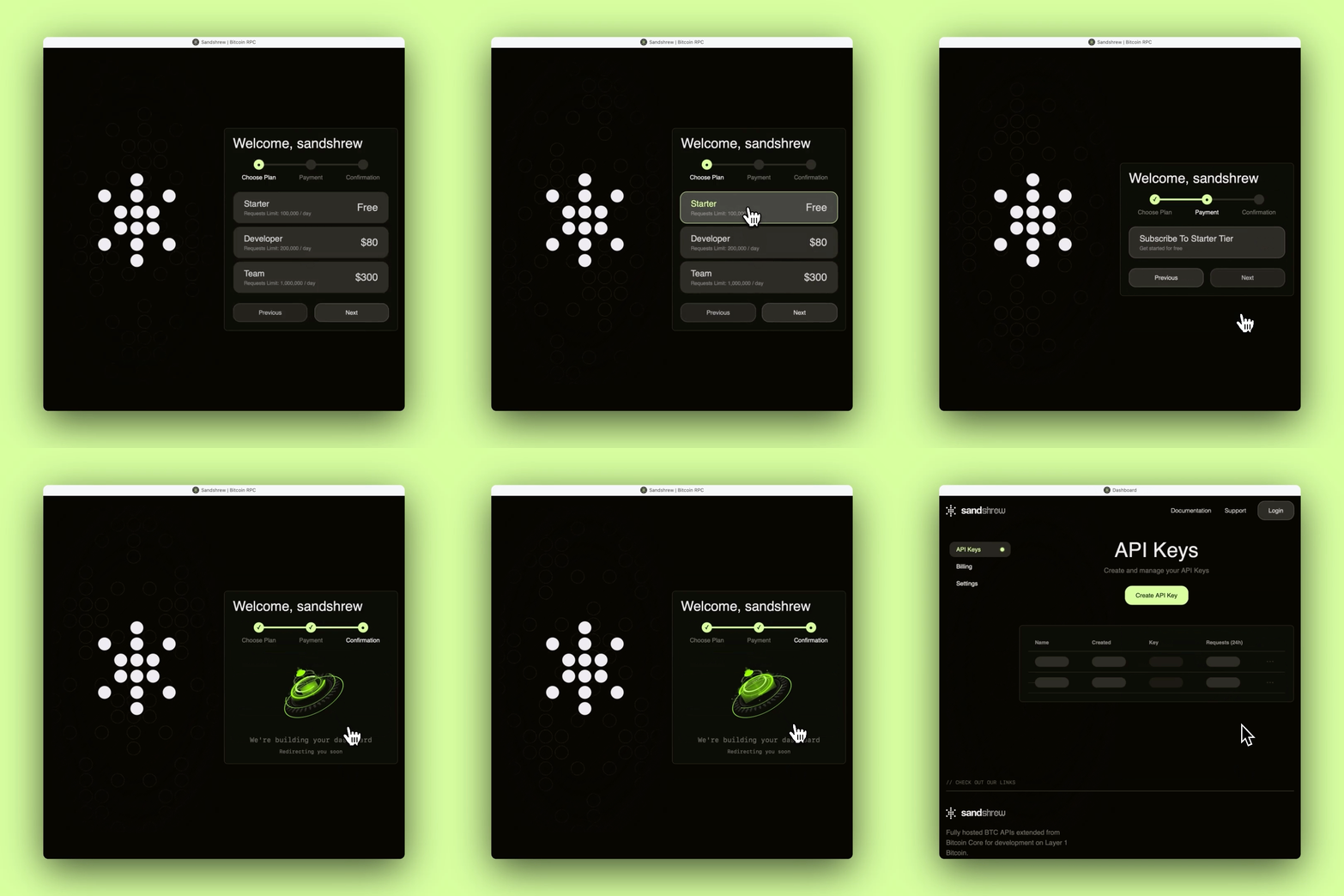
### Choose your plan
Get started for Free or sign up for developer or team packages to get more RPC calls. If you have unique requirements or need more calls per day, reach out to @drorjen\_oyl on telegram.
Choose Plan
### Create an API key
Once verified, you’ll be taken to the Sandshrew Dashboard where you can create your API key, view analytics, or raise support requests.
You must create an API key to authenticate your network requests. Click **CREATE NEW API KEY**.
From the pop-up, provide a name, then click **CREATE**.
Get your key
## Testing
Once you have your API key, you can query the RPC with a command similar to the following:
```
curl https://mainnet.sandshrew.io/v1/YOUR-API-KEY \
-H 'Content-Type: application/json' \
-d '{
"jsonrpc": "2.0",
"id": 1,
"method": "esplora_blocks:tip:height",
"params": []
}'
```
Your API key grants you access to all SANDSHREW namespaces, for all networks supported by SANDSHREW, identified by the subdomain in the URI. In the preceding example, the RPC will serve data for the signet network.
## Network Endpoints
### Querying the RPC
To fetch data, create an HTTPS POST request to any one of the following endpoints with the following header set:`Content-Type: application/json`and with the request, submit a JSON-RPC payload as the POST data containing your method call.
### Bitcoin
`https://mainnet.sandshrew.io/v1/YOUR-API-KEYhttps://signet.sandshrew.io/v1/YOUR-API-KEYhttps://testnet.sandshrew.io/v1/YOUR-API-KEY`
### Dogecoin
`https://dogecoin-mainnet.sandshrew.io/v1/YOUR-API-KEYhttps://dogecoin-testnet.sandshrew.io/v1/YOUR-API-KEY`*(Dogecoin endpoints currently do not support the `esplora` or `ord` namespaces)*